Chapter 2
Logic circuit
Composition
- Inputs
- Outputs
- Functional specification
- Timing specification
Types
-
Combinational Logic
Memoryless
Output determined by current values of inputs
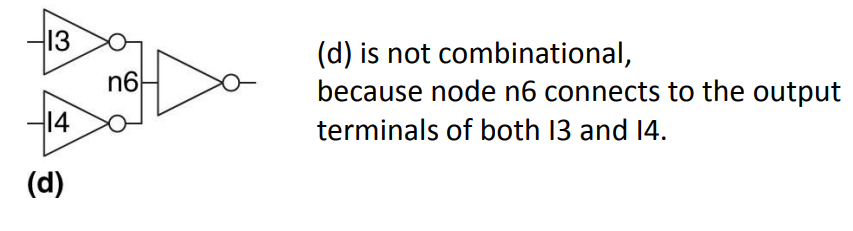
Rules of combinational composition
- Every element is combinational
- Every node is either an input / connect to 1 output
- no cyclic paths
-
Sequential Logic
Has memory
Output determined by previous and current values
Boolean Equations
Definitions
Complement : 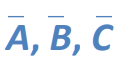
Literal: 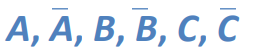
Implicant: 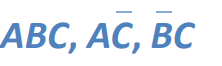
Minterm: product that includes all input variables 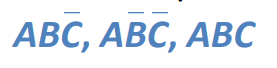
Sum: the OR of one or more literals
Maxterm: sum that includes all input variables
Sum-of-Products (SOP) Form
All equations can be written in SOP form
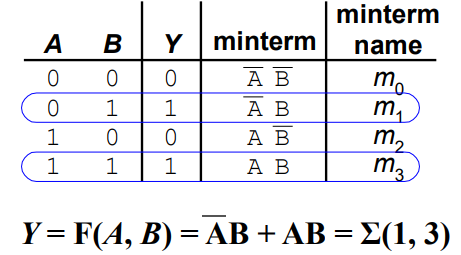
Product-of-Sums (POS) Form
All Boolean equations can be written in POS form
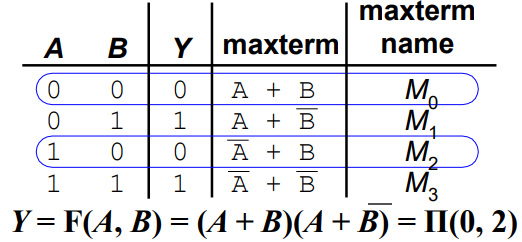
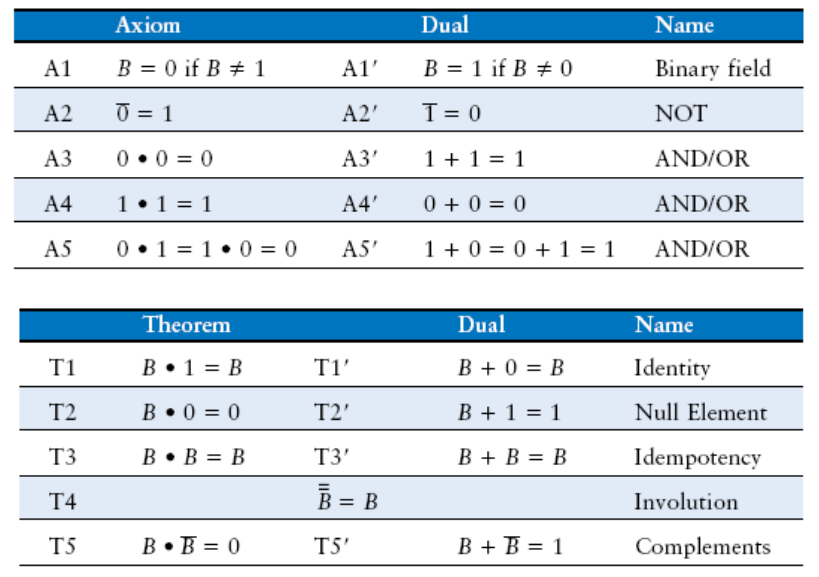
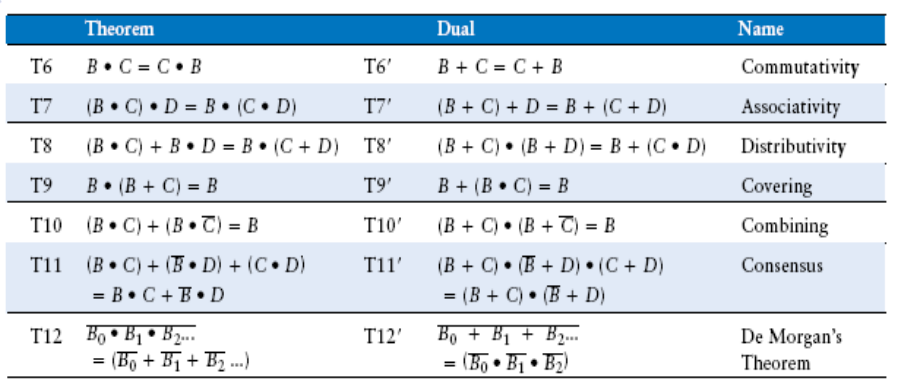
Boolean Algebra
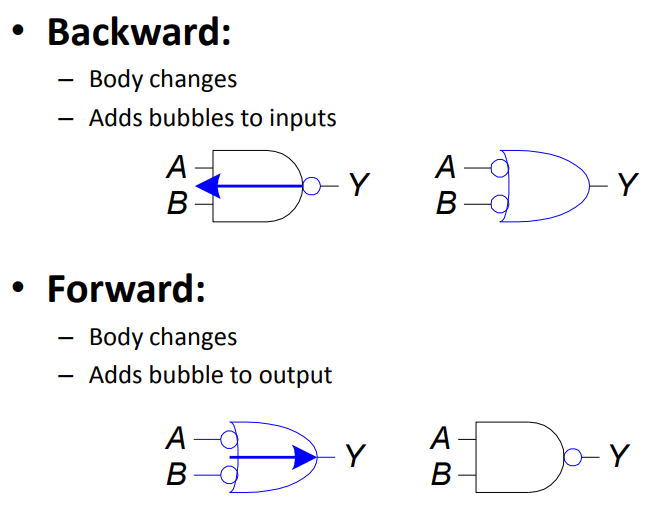
Bubble pushing
From Logic To Gates
Two-level logic
ANDs followed by ORs
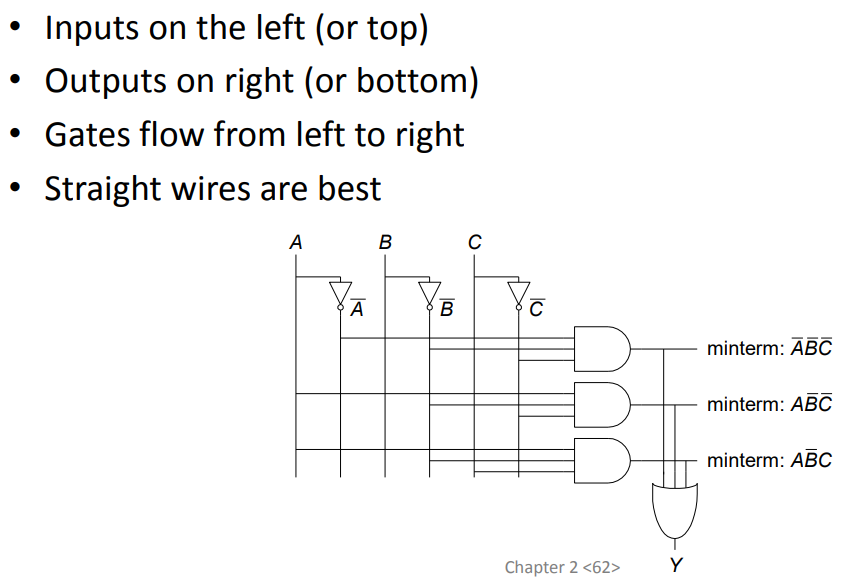
Multiple output circuits
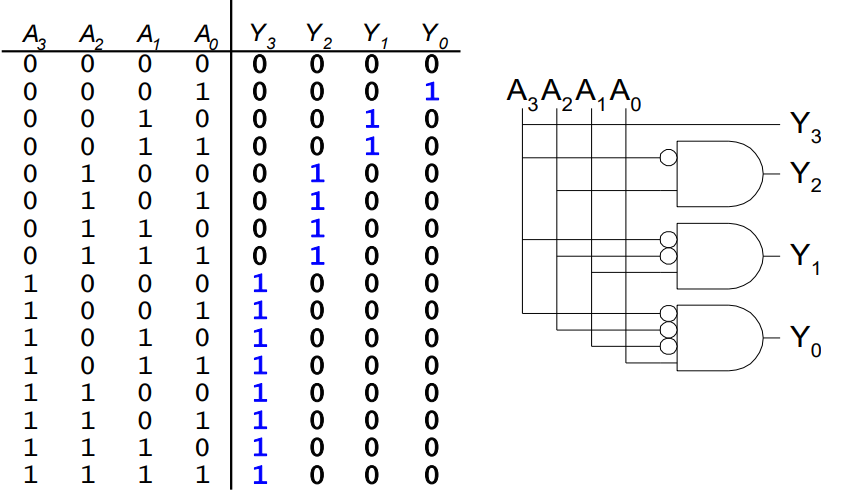
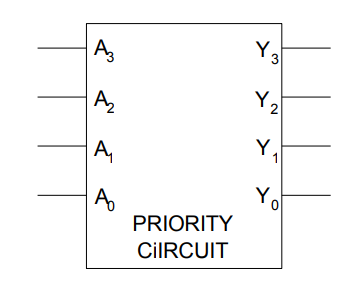
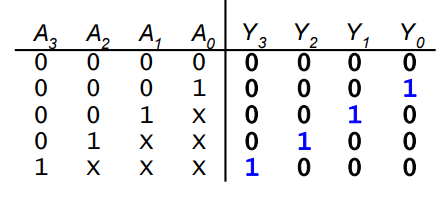
A3>A2>A1>A0
Don’t cares
X’s and Z’s, Oh My
Unknown or Illegal : X
– Actual value somewhere in between
– Could be 0, 1, or in forbidden zone
• Warnings: – Contention usually indicates a bug.
– X is used for “don’t care” and contention
Floating : Z
Floating output might be 0, 1, or somewhere in between.
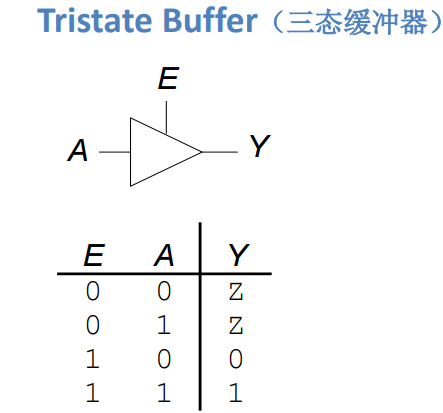
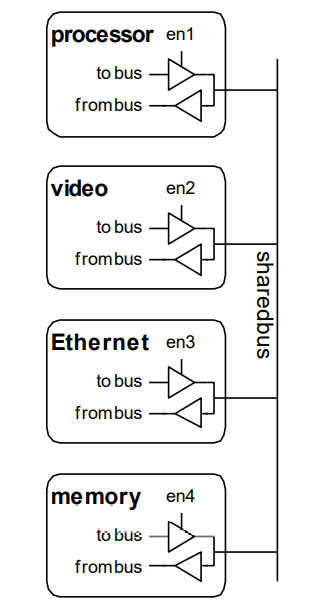
Tristate Buses
Many different drivers
Exactly one is active at once
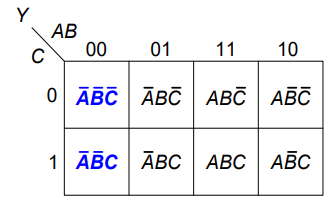
Karnaugh Maps
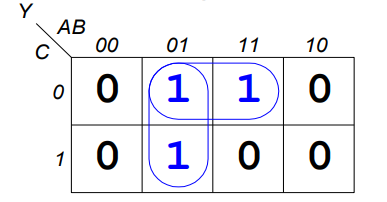
K-Map Rules
- Every 1 must be circled at least once
- Each circle must be as large as possible
- Each circle must span a power of 2 squares in each direction
- A circle may wrap around the edges
- A X is circled only if it helps minimize the equation
Combinational Building Blocks
Multiplexers
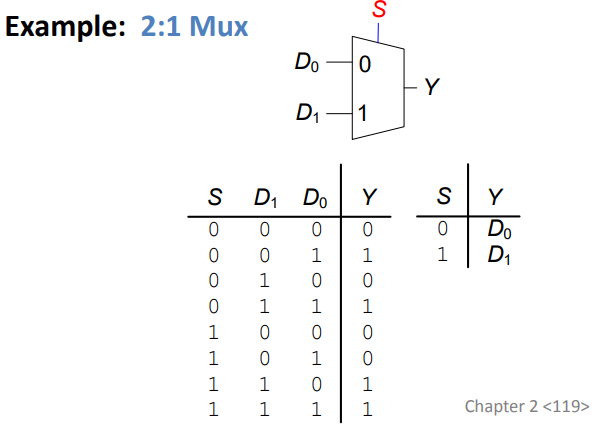
Implementations
-
Logic gates
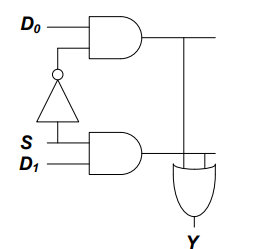
-
Tristates
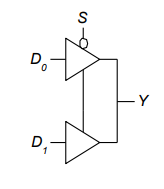
4:1 Multiplexers
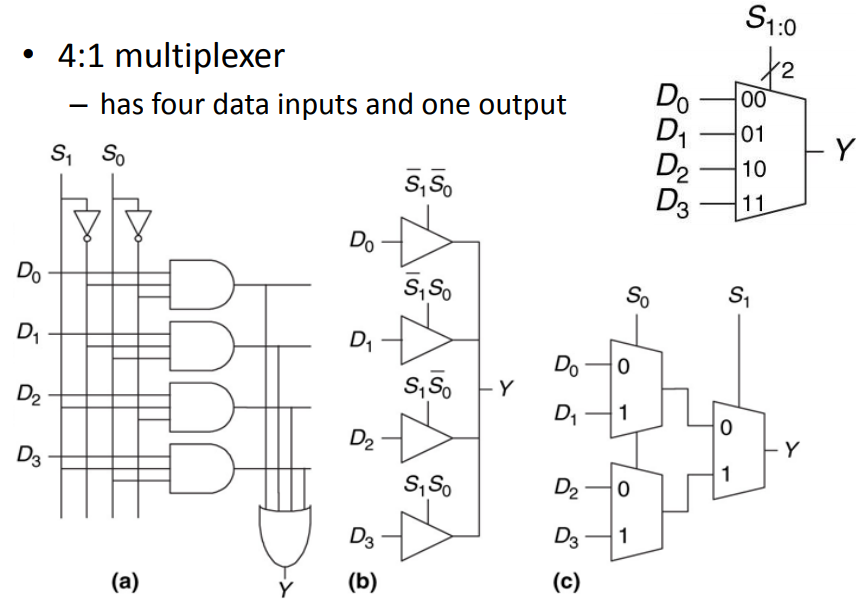
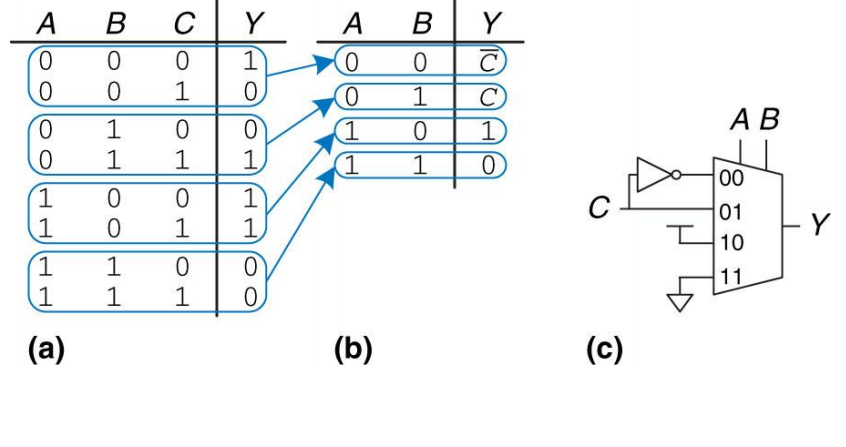
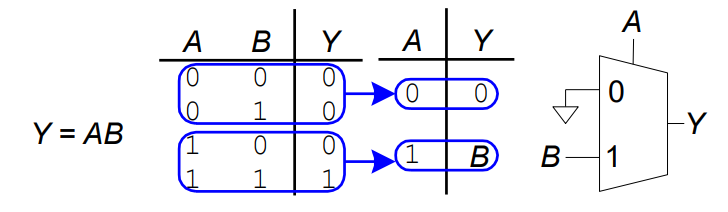
Reducing the size of multiplexers
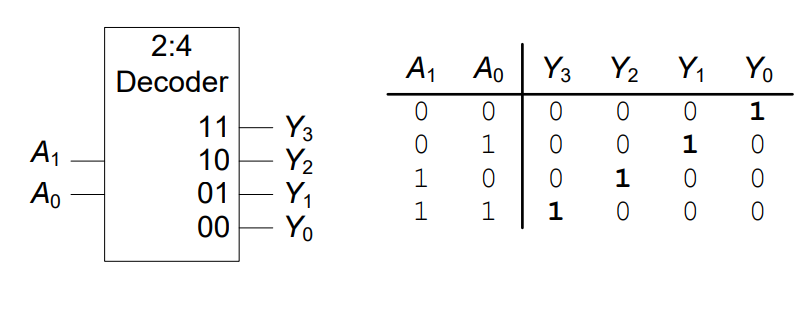
Decoders
One-hot outputs : Only one output HIGH at once
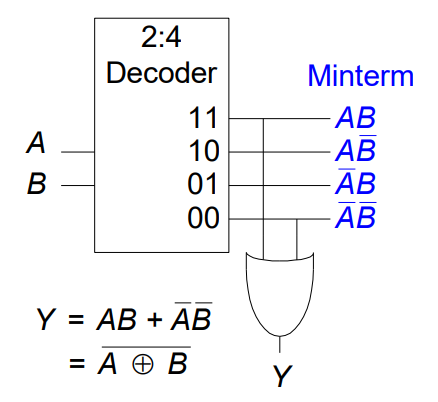
Decoder Implementation
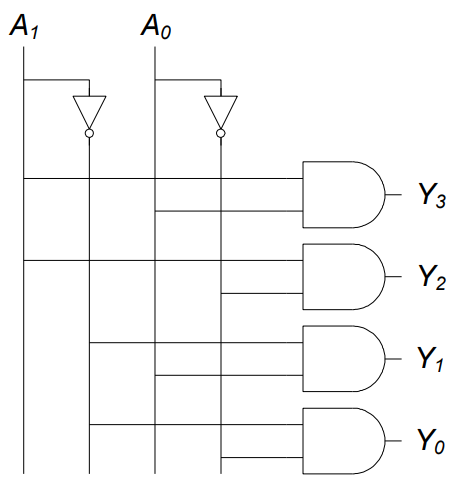
OR minterms
Timing
Propagation & Contamination Delay
- Propagation delay(传输延迟):

- Contamination delay(最小延迟):
 output
Cause of delay
Capacitance and resistance in a circuit
Speed of light limitation
• Reasons why tpd and tcd may be different:
– Different rising and falling delays
– Multiple inputs and outputs, some of which are faster than others
– Circuits slow down when hot and speed up when cold
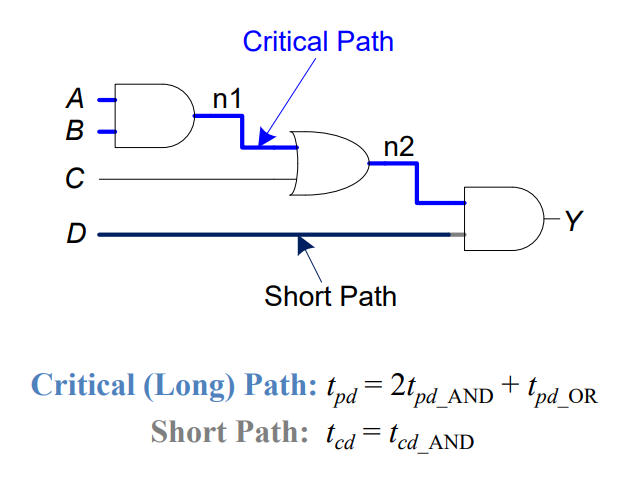
Critical (Long) & Short Paths
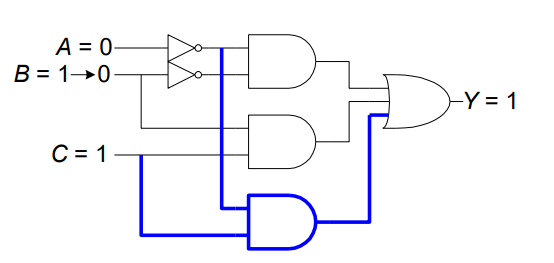
Glitch
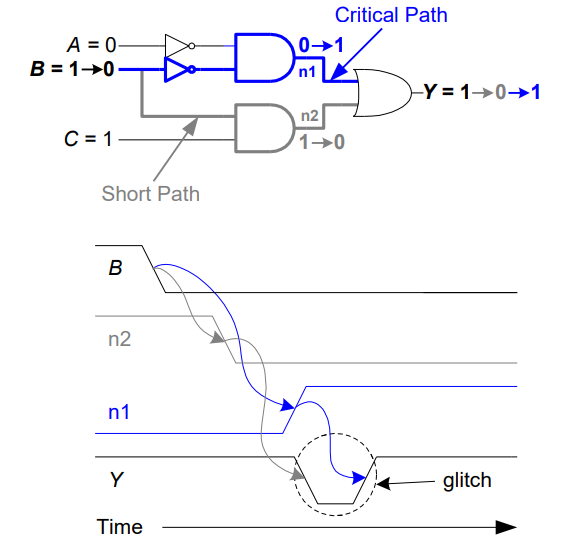
Fixing the glitch